
Forest Cabin: Survive
Harvest Star GameStrategy
4.6635.00 Reviews
- Version
- 2.13.001
- Installs
- 1.00M
- Age Rating
- Teen
Screenshots




Our Review of Forest Cabin: Survive
 Analysis by Appyee
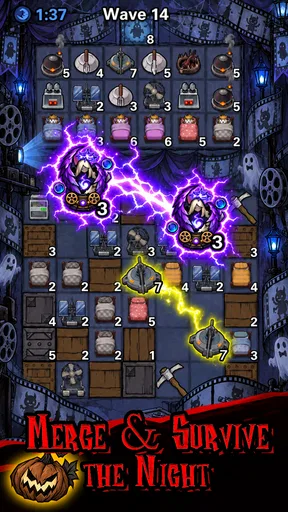
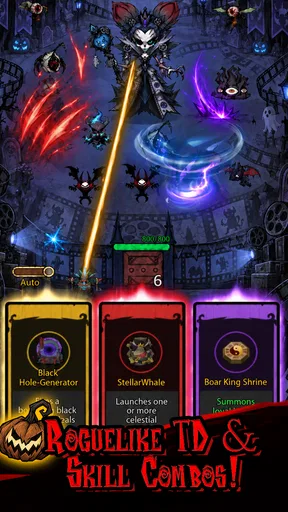
I spent time with Forest Cabin: Survive as a strategy game built around defending a cabin, combining towers, and choosing skills during roguelike runs. That combination gives it a more active feel than a traditional tower-defense game: I was not simply placing units and waiting for a fixed solution. I had to look at the current threat, decide what to merge, and accept that a useful run can still change direction after an unexpected choice.
My first impression was that the game is easiest to understand when I treat each attempt as a small experiment rather than a campaign I must perfect immediately. The cabin gives every decision a clear purpose, while merged towers provide a satisfying sense of progress. The roguelike structure adds uncertainty, so a familiar opening does not always lead to the same defensive plan. I found that appealing during short sessions, although players who prefer completely predictable levels may find the changing choices less comfortable.
Harvest Star Game presents this as a free strategy title, with optional purchases ranging from $0.99 to $99.99 per item. It is marked for Teen audiences, runs on Android 8.0 or later, and the current version is 2.08.001. The game arrived on December 15, 2025, and its audience has already reached over 500 thousand installs, with a 4.3 average from around 7 thousand ratings. Those figures suggest a healthy level of interest, but they do not replace the more important question: whether the interface and decision-making suit the way you personally play.
How clearly the cabin defense communicates what to do
The central loop is straightforward to describe. Enemies threaten the cabin, towers protect it, and merging helps turn available defenses into stronger tools. That basic relationship is valuable because it gives new players an anchor. Even when the skill choices become less obvious, I could return to the immediate question of what would keep the cabin safe during the next attack.
Readability matters especially in a game where several things can compete for attention. A player may be watching enemy movement, checking tower positions, looking at upgrade possibilities, and considering a roguelike skill at the same time. I found the experience more manageable when I paused before committing to a merge instead of tapping through every available option. That habit reduces the chance of improving a tower that looks attractive in isolation but leaves the overall defense poorly balanced.
The navigation feels most approachable when I focus on one layer at a time. First I identify the immediate danger, then I inspect the towers that can respond, and only after that do I think about longer-term combinations. This is not just a beginner tip. It is a useful workflow for anyone who finds multiple visual choices tiring, because it turns a crowded decision into a sequence of smaller checks.
One of the game’s better design qualities is that the cabin gives the battlefield a visible point of reference. In many strategy games, players can lose track of what they are protecting while concentrating on upgrades. Here, the defensive objective remains easy to explain: every improvement should either help control the approach or increase the cabin’s chance of surviving the next pressure point. When I was unsure about a choice, that simple test usually helped.
The merged-tower idea also makes progress easier to read than a system based only on hidden numerical bonuses. Combining visible defensive pieces creates a physical change on the board, which helps connect an action with its result. For players who learn better from spatial relationships than from long descriptions, that can be more welcoming than a menu-heavy strategy game.
Where the interface may demand extra attention
The same visual activity that makes the game engaging can become a barrier. If several threats arrive while upgrade or skill choices are available, a player with limited attention, slower reading speed, or difficulty switching focus may need more time than the situation naturally allows. I recommend playing the first sessions without trying to optimize every choice. Learning the visual rhythm is more useful than chasing a perfect run.
Small-screen play can also change the experience. A phone held in one hand leaves less room for careful inspection than a larger display, and a player with reduced precision may prefer a stable surface and deliberate taps. I would not choose this game for someone who needs large, widely separated controls unless they can test the interface comfortably on their own device.
There is another subtle issue: strategy games often make poor choices feel like personal mistakes even when the available options were unfavorable. The roguelike element means that not every run will offer the same path. I found it healthier to judge a decision by the information available at that moment, not by the result several waves later. That mindset makes the game less stressful and is particularly useful for players who become frustrated by irreversible choices.
Motor, sensory, and cognitive considerations in actual play
From a motor perspective, the game is more suitable for controlled interaction than for players who need a completely hands-off experience. Merging towers and selecting skills require purposeful input, and defensive decisions are tied to what is happening on the board. I could play in short bursts, but I still needed to remain engaged rather than simply letting the game run in the background.
Players with limited finger movement may want to experiment with how they hold the phone before settling into a routine. I found that using both hands made it easier to inspect the board and confirm a choice, while a one-handed grip was more convenient but less precise. The practical trade-off is simple: portability improves when the device is held casually, but careful strategy improves when the phone is supported.
For players with tremors or reduced tap accuracy, the most important habit is to avoid rushing into a merge just because it is available. I would first identify the intended tower, then check whether the action changes the defensive shape in a helpful way, and only then tap. That extra pause costs little during a calm moment and can prevent a misplaced action during a busy one.
Sensory comfort is harder to separate from personal preference because strategy games use movement and visual feedback to signal urgency. I found the changing battlefield more stimulating than a static puzzle board, but not every player will enjoy that level of activity. Anyone sensitive to motion, contrast, or rapid visual change should approach cautiously and stop if the presentation becomes tiring. I would not assume that a game’s simple premise automatically makes it low-stimulation.
Audio can influence how comfortable the experience feels, but I would not rely on sound alone to understand a threat. My safer approach was to keep visual attention on the cabin and towers, treating any sound as supporting feedback rather than the only warning. That makes the game more practical in shared spaces, on public transport, or whenever the phone is muted.
Cognitively, the title asks for several kinds of reasoning at once. I had to recognize immediate danger, compare tower value, assess the possible benefit of a skill, and remember that a strong short-term improvement might not fit the next stage of a run. This is satisfying for players who enjoy layered decisions, but it can be demanding for anyone looking for a relaxing game with little mental bookkeeping.
My most useful adjustment was to create a personal priority order. I generally looked at cabin safety first, then coverage, then the value of a merge, and finally the appeal of a new skill. This prevented the most visually exciting option from automatically winning. It is a small strategy, but it also improves accessibility because it reduces the number of decisions I try to solve simultaneously.
A realistic everyday session
Imagine opening the game during a short break while waiting for an appointment. I would not begin by trying to master every system. I would play one run with the brightness and sound set to a comfortable level, keep the phone supported, and focus on learning how tower merging affects the defense. If the session becomes interrupted, the value of that run depends on how the game handles leaving and returning, so I would avoid starting when I cannot give the board consistent attention.
That scenario shows both the appeal and the limitation. The game’s defensive loop is easy to pick up for a quick attempt, yet the decisions are meaningful enough that I do not experience it as a disposable tap-and-wait activity. If I am tired, distracted, or in a noisy environment, I am more likely to make a poor choice. For me, it works best during a deliberate break rather than while multitasking.
Access across devices, environments, and play styles
Forest Cabin: Survive is a mobile game, so situational access matters as much as the interface itself. A player may use it at home with both hands, outside under changing light, or in a crowded place where attention is divided. I found the game easier to evaluate in a quiet setting first, because that separates the actual strategy from the distractions of the environment.
On a larger phone or tablet-sized display, the board should be easier to inspect simply because there is more physical room for the game’s visual relationships. On a smaller phone, the player may need to zoom mentally rather than physically: identify the most important area, make one decision, and then return to the wider board. That approach is less exhausting than trying to track every tower and threat continuously.
It is also worth considering posture. A player lying down may have trouble keeping the screen at a comfortable angle during a longer run, while someone seated at a desk can support the device and make more precise selections. I preferred a stable posture when experimenting with merges, because it reduced accidental taps and made it easier to compare options before committing.
The game’s free entry point makes it easy to try without paying first, but the presence of optional purchases changes the decision for some households. I would be especially careful when sharing a device with a younger player, even though the content rating is Teen. The purchase range is broad, so I would review the device’s purchase controls before handing the phone to someone else. That is a practical safeguard, not a criticism of the core defense loop.
Players who need a game to work comfortably without sound may find the visual objective useful, since the cabin and towers provide the main strategic context. Still, I would not describe the experience as fully accessible for every sensory need. The safest conclusion is that it can fit muted, public, or low-volume play when the player can follow the board visually, but individual comfort with movement and visual density remains important.
For language-sensitive players, the best way to reduce friction is to learn the role of each choice through repeated low-pressure runs rather than trying to absorb every label immediately. Strategy games often become easier once the player recognizes patterns instead of reading every word. Here, the defensive context gives those patterns a practical meaning: a tower is not merely an icon, but part of the answer to a particular threat.
What still gets in the way
The largest remaining barrier is the tension between accessibility and urgency. A player may understand a choice perfectly but still struggle to make it quickly enough when several events compete for attention. I would have liked more room to inspect decisions at my own pace, although I also recognize that pressure is part of what makes this a strategy game rather than a static planning exercise.
The roguelike structure can create uneven cognitive demand. One run may feel clear because the available skills support a familiar plan, while another may require more experimentation. That variety keeps the game from becoming mechanical, but it can be tiring for players who need stable routines. If you prefer to practice one solution until it becomes automatic, a conventional level-based tower-defense game may be a better fit.
Optional purchases are another point of friction. The game can be approached as a free title, but the available item prices extend from less than a dollar to almost one hundred dollars. I would not recommend making a purchase simply because a run went badly. Waiting until you understand the game’s normal rhythm is wiser, especially for players who are sensitive to pressure or who want a predictable entertainment budget.
There is also a difference between being playable and being broadly inclusive. I could adapt my posture, pace, and decision order, but those workarounds depend on the player having enough control and concentration to use them. Someone who needs very large controls, minimal visual motion, extensive audio description, or a fully turn-based pace should investigate the experience on their own device before committing time or money.
That limitation does not make the game a poor choice. It simply defines its audience more clearly. The title is strongest for players who enjoy visual strategy, can make deliberate taps, and do not mind learning through changing runs. It is weaker for players who want a calm puzzle with no time pressure, a highly configurable accessibility layer, or a system that explains every consequence before an action becomes final.
My inclusive verdict on the survival strategy
I came away viewing Forest Cabin: Survive as a focused mobile strategy game with a clear defensive goal and enough variation to make repeated attempts interesting. The merged-tower system gives decisions a visible shape, while roguelike skills prevent every run from feeling identical. I especially liked the practical discipline the game encourages: protect the cabin first, improve the board with purpose, and do not confuse the most exciting option with the most useful one.
Its accessibility is best understood through flexibility of play rather than through a claim that it suits everyone. I could make it more comfortable by supporting the phone, slowing down my choices, playing in a quieter environment, and using a consistent decision order. Those adjustments helped with attention and precision, but they cannot remove the underlying demands of visual tracking and active input.
I would recommend it to a friend who enjoys tower defense but wants more uncertainty than fixed stages usually provide. It is also a good candidate for someone who likes experimenting with combinations and learning from imperfect attempts. I would steer a friend toward a more traditional, slower strategy game if they need generous time for every action, very simple sensory presentation, or a completely predictable progression.
The free price makes trying it straightforward, and the Teen rating gives a useful indication of the intended audience. Just remember that optional purchases are part of the experience, and set reasonable controls if the device is shared. My final advice is to give the first few runs a learning purpose instead of treating them as tests of skill. Once the board becomes familiar, the cabin defense feels much less like a scramble and much more like a series of manageable choices.
For me, that balance is the game’s strongest quality. It does not remove every barrier, and it is not the right choice for every ability or setting, but it offers enough control for many players to adapt how they hold, read, and approach the game. If you enjoy thoughtful defense and can work comfortably with a visually active board, this is a worthwhile free strategy game to try.
Privacy and Permissions
See what permissions an app requests and how it handles your data.
- Wi-Fi connection information
- view Wi-Fi connections
- Other
- view network connections, full network access, control vibration, prevent device from sleeping, Google Play license check
Verdict
Strengths of Forest Cabin: Survive
- Simple survival mechanics are easy for newcomers to understand.
- The cabin provides a clear home base for planning and storage.
- Exploration encourages careful resource management and preparation.
- The isolated setting creates a tense, atmospheric survival experience.
- Short play sessions make it suitable for casual mobile gaming.
Limitations of Forest Cabin: Survive
- Progress can feel repetitive after mastering the basic survival loop.
- Limited guidance may leave new players unsure what to do next.
- Resource gathering can become time-consuming during longer sessions.
- Some dangers may feel frustrating when supplies are running low.
- Performance and battery use may vary across older mobile devices.
Other Releases by Harvest Star Game
View All
Silent Castle: Survive
Strategy4.3
Similar Picks in This Category
View All
Clash of Clans
Supercell4.5

Plants vs. Zombies™
ELECTRONIC ARTS3.7

Lords Mobile: Kingdom Wars
IGG.COM4.5

Clash Royale
Supercell4.4

State.io — Conquer the World
CASUAL AZUR GAMES4.1

Car Driving School : Car Games
Spark Game Studios3.9
Frequently Asked Questions
What is Forest Cabin: Survive about?
Forest Cabin: Survive is a survival-focused game in which you must endure life in a dangerous wilderness while using a remote cabin as your main shelter. You gather resources, explore the surrounding forest, craft useful items, manage your supplies, and make careful decisions to stay alive. Progress depends on preparation, observation, and learning how to handle the threats and conditions around you.
How do you survive during the first days in Forest Cabin: Survive?
The early stages are mainly about establishing a reliable routine. Collect basic materials near the cabin, look for food and water, and avoid traveling too far before you understand the area. It is also important to organize your inventory and return to shelter before conditions become dangerous. Crafting essential tools early makes gathering resources safer and helps you prepare for future exploration.
Does Forest Cabin: Survive require an internet connection?
The game may be playable offline for its core survival experience, which is convenient when you want to play without mobile data or Wi-Fi. However, certain features can depend on the version installed, including advertisements, updates, cloud-related services, or optional online content. For the most accurate information, check the connection requirements shown on the Google Play Store or App Store listing before downloading.
Is Forest Cabin: Survive suitable for beginners?
Forest Cabin: Survive can be enjoyed by beginners, but it is not necessarily effortless. Survival games often expect players to learn through experimentation, and wasting resources or exploring without preparation can create difficult situations. New players should focus on nearby gathering areas, keep essential supplies in reserve, and use the cabin as a safe base. Once the basic crafting and survival systems become familiar, progression feels much more manageable.
Are there purchases or advertisements in Forest Cabin: Survive?
The availability of advertisements and in-app purchases can vary according to the platform, region, and version of Forest Cabin: Survive. Before installing, review the store page for labels such as “contains ads” or “in-app purchases.” If the game offers optional purchases, they may provide convenience or additional content rather than being strictly necessary, but players should still check pricing and permissions before confirming any transaction.
Play our best games!


